Legal Tech AnalysisArticle
LexBeat in Focus: Who is allowed to invest in law firms?
Harvey and Legora are talking about IPOs, AI-native law firms in the US are attracting venture capital. In Germany, investors are not permitted to hold stakes in law firms. What the ban on third-party ownership regulates, how the CJEU has assessed it, who is fighting over its future, and where the capital is flowing instead.

LexBeat is the section of the German Legal Tech Summit magazine. LexBeat in Focus provides an in-depth look at a single topic.
The finding: plenty of money, but not for law firms
Hardly any other area of the legal industry is currently attracting as much capital as Legal Tech. In 2023, venture capital for the sector stood at around $1 billion; by 2025 it exceeded $4 billion. In the first quarter of 2026 alone, $2.34 billion was raised across 103 funding rounds.1 Harvey was valued at $15.5 billion in September,2 and Legora at $8.8 billion in October.3 Both are now reportedly considering an IPO.4
What is new is that capital is also flowing into new law firm models. Behind the US law firm Crosby, which reviews contracts using AI and its own lawyers, is a technology company that raised $85.8 million in nine months. At its Series B round in March 2026, it was reportedly valued at $400 million.5
In Germany, that is not possible. Here, capital flows into Legal Tech companies, but not into law firms. Remarkably, this only works in one direction: in 2025, the commercial law firms CMS and Dentons took part in the funding round of the Berlin-based legal AI provider Noxtua.6 Conversely, a technology company would not be permitted to hold a stake in a German law firm. The reason is the ban on third-party ownership.
What the prohibition on non-lawyer ownership regulates
The major BRAO reform, which came into force on 1 August 2022, significantly opened up the corporate law of the legal profession. Since then, lawyers may in principle join forces with members of all liberal professions within the meaning of the Partnership Companies Act.7 The previous majority requirements in favour of the legally advising professions have been dropped. In their place are rules that safeguard the independence of the legal profession: members of management and supervisory bodies may only come from among professions eligible to form partnerships.8 Multi-tier structures are also permitted: licensed professional practice companies may themselves be shareholders in another professional practice company.9
However, the reform deliberately drew a line. Pure capital participation remains excluded; all shareholders must actively work within the professional practice company.10 Under Section 59i (3) BRAO, shares may not be held for the account of third parties, and third parties may not share in the profits. Shareholders who do not meet the requirements of Section 59c (1) BRAO have no voting rights.11
In practice, this means that Legal Tech companies, legal expense insurers or pure financial investors cannot hold a stake in a German law firm.12 The ban is justified by the protection of lawyers' core duties: independence, confidentiality and freedom from conflicts of interest.
The Halmer case: Luxembourg confirms the ban
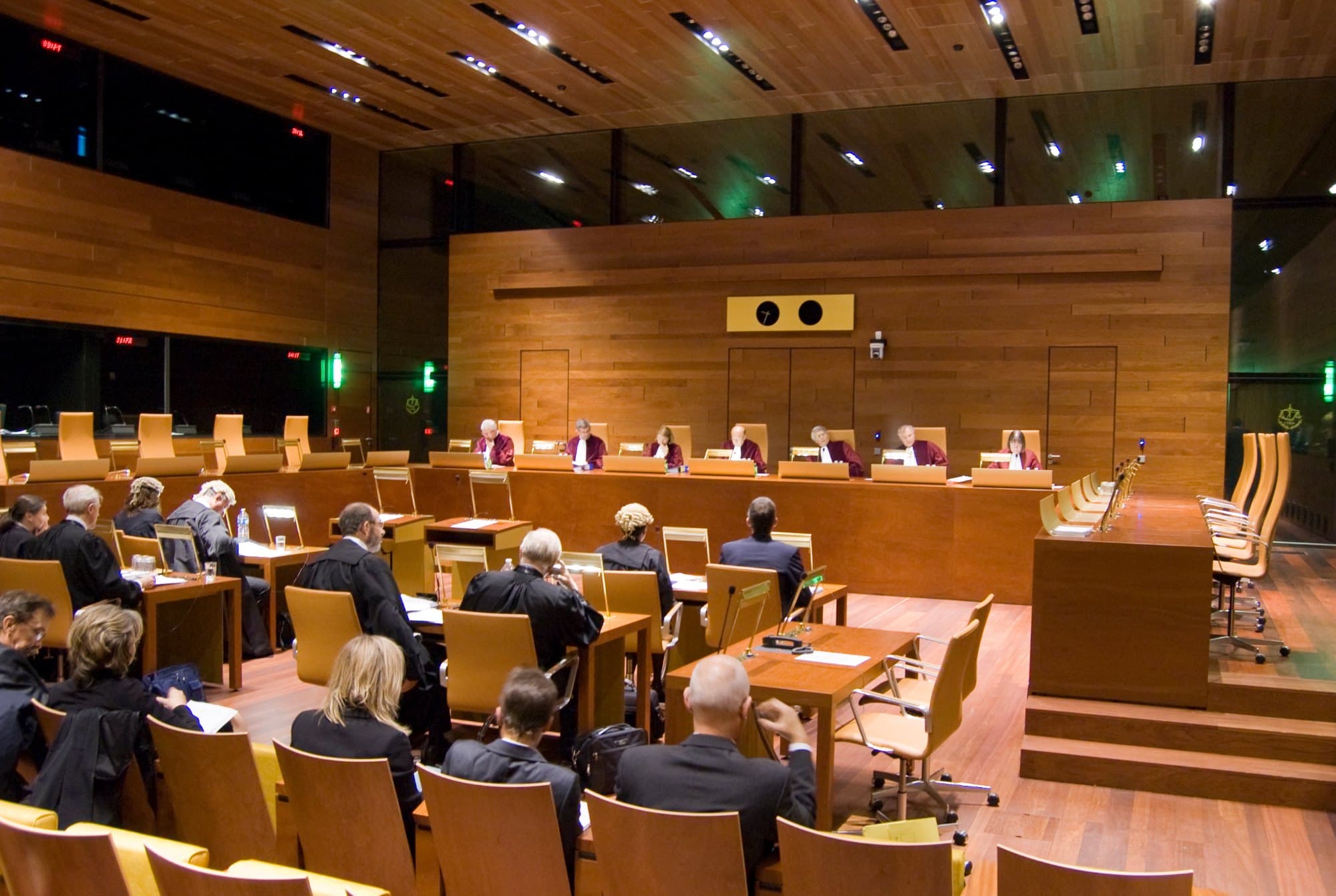
The original case came from Munich. In March 2021, an Austrian GmbH acquired 51 percent of the shares in Halmer Rechtsanwaltsgesellschaft UG, solely for financing purposes. The articles of association excluded any influence of the non-lawyer shareholder on the practice of the profession.13 Nevertheless, the Munich Bar Association revoked the company’s licence on 9 November 2021.14 The Bavarian Court of Honour for Lawyers referred the case to the CJEU, expressing unusually clear doubts as to whether the ban is necessary where the articles of association comprehensively protect the independence of the legal profession.15
In July 2024, a turning point seemed to be emerging. In his opinion, the Advocate General considered the regulation then in force to be incoherent and therefore incompatible with the Services Directive, because under the old law non-lawyer shareholders were permitted to hold up to 49 per cent of the capital.16
The Court took a different view on 19 December 2024. A Member State may prohibit the participation of pure financial investors in the capital of a law firm. The resulting restriction on freedom of establishment and the free movement of capital is justified because it ensures that lawyers practise their profession independently and in compliance with their professional obligations.17 The profit motive of a pure financial investor could affect the organisation and activity of a law firm and jeopardise the independence of the legal profession.18 In doing so, the CJEU granted Member States a wide margin of discretion.19
Two limitations are important. The judgment relates to the legal position applicable until 31 July 2022. And the court ruled that a ban is permissible, not that it is required.20 Following the judgment, the claimant considered lodging a constitutional complaint.21
The debate: the legal profession versus the legal tech industry
The legal profession itself largely does not want an opening. Almost 7,600 lawyers took part in a survey by the Federal Ministry of Justice in cooperation with the BRAK at the end of 2023. 62.6 percent spoke out against any relaxation, and around 73 percent saw risks to core professional duties that even statutory safeguards could not address. Opposition was strongest among sole practitioners, while partners and employees at medium-sized and large law firms were more open. At the same time, around 32 percent wanted to invest more in the digitalisation of their law firm, and about 24 percent saw a need for comprehensive integration of AI.22
On the other side stands the Legal Tech Verband. In January 2025, just a few weeks after the Halmer ruling, it presented an expert opinion by Jörn Axel Kämmerer of Bucerius Law School. It concludes that the current regulation breaches European law and proposes allowing capital participation under controlled conditions.23 As a possible model, the opinion cites the “Alternative Business Structures” from the United Kingdom.24 The association’s aim is to open up the BRAO to capital participation by third parties outside the profession, so that law firms and legal tech business models can finance growth through equity.25
The opposing position was formulated in December 2025 by the BRAK and other organisations representing the liberal professions in a joint statement. They call for a stronger ban on outside ownership and fear circumvention through participation, chain or holding models. Their core message: the liberal professions are not a capital market. Digitalisation can be financed through bank loans or funding programmes, investors from outside the profession are not subject to any duty of confidentiality, and the entry of international investors jeopardises diversity, particularly in rural areas.26
How real this concern is can be seen in tax advisory services. There, financial investors were able to hold indirect stakes through multi-tiered, cross-border structures, for example via auditing firms based in Luxembourg. As at April 2026, the Federal Government was aware of 57 tax advisory professional firms with such structures, out of a total of 15,232 recognised firms. It was aware by name of stakes held by Partners Group and EQT, but could not verify further names reported in the press. The legislature has responded: at the request of the Bundesrat and the chambers of tax advisers, the Bundestag inserted a clarification into § 55a StBerG, according to which indirect stakes held by financial investors are also excluded, with no grandfathering for existing structures. After the Bundesrat had halted the law in May for other reasons, it was passed in June 2026 and promulgated on 2 July 2026.27
A look abroad: where capital is allowed into law firms
Other legal systems are taking different paths, and it is precisely there that the new AI law firms are emerging.
United Kingdom. In May 2025, the Solicitors Regulation Authority licensed Garfield.Law as the first law firm to provide its legal services entirely via AI.28 Garfield specialises in enforcing outstanding invoices of up to £10,000 in small-claims proceedings, with every step requiring client approval.29 Lawhive operates three regulated law firms on its own technology platform, two in the United Kingdom and one in Arizona, with around 500 lawyers and more than $35 million in annual revenue.30
USA. Arizona, Utah, Washington D.C. and now Puerto Rico allow, in varying forms, non-lawyers to hold stakes in law firms.31 By April 2025, Arizona had approved 136 such Alternative Business Structures, up from just 19 in 2022.32 Under the programme, KPMG, Axiom, LegalZoom and Elevate, among others, operate their own law firms, as does the legal AI provider Eudia.33
In the other states, AI-native law firms use a structure of two entities: a technology company that raises the venture capital, and a law firm owned by lawyers, linked via a services agreement.34 Crosby works the same way: the law firm Crosby Legal PLLC uses the technology of Crosby Legal, Inc., in which Sequoia and Bain Capital Ventures, among others, hold stakes.35
Whether such a model could be transferred to Germany remains unclear. In any case, the BRAO prohibits holding shares for the account of third parties and allowing third parties to share in the profits of a professional practice company.
Where the capital flows instead
The ban on outside ownership protects the shareholder circle of the law firm, not the value chain in which it operates. According to an analysis by the law firm consultancy Law Firm Change Consultants, capital therefore reaches the German legal market via other routes: through stakes in legal tech providers, through litigation funding, through service and infrastructure companies, for example for IT or back office, and through legal service providers outside the legal profession.36
The largest flow goes into technology. Noxtua closed a Series B round of €80.7 million in April 2025, led by the publisher C.H.Beck, with CMS, Dentons and Northern Data as further investors.37 Wolters Kluwer acquired the Berlin start-up Libra in November 2025 for up to €90 million.38 Law firms purchase such services and, according to the assessment of the same consultants, thereby hand over a growing share of their margin to providers in which investors hold stakes.39
According to this analysis, there are also registered legal service providers and debt-collection models under the Legal Services Act. They handle standardisable mass proceedings with capital that is not available to any law firm. The consultants conclude from this that competition for clients has long been taking place between differently financed market participants: a law firm can decide against third-party capital within its own circle of shareholders, but it cannot decide against competing with well-capitalised providers.40
What is likely to happen
A relaxation is unlikely in the short term. The CJEU has upheld the ban, the majority of the legal profession rejects any easing, and the chambers are calling for tightening rather than relaxation. In the field of tax advice, the legislator has shown the direction in which it is currently thinking: it closed the loophole for indirect shareholdings instead of opening the way for investors. Notably, the Federal Government had initially removed the clarification from its draft, and it was only the Bundestag that reinstated it.41 A debate about similar clarifications in the BRAO is therefore more likely than any relaxation.
The pressure will grow via the market. While the law remains stable, the environment is changing. AI-native law firms abroad are financing themselves with venture capital, legal tech platforms are reaching billion-dollar valuations, and legal service providers operating under the RDG are taking on standardisable mandates. German law firms will be competing with providers that are allowed to finance themselves differently than they are.
The financing question is becoming an AI question. The chambers point to bank loans and funding programmes, the Legal Tech Verband to equity capital. The more that law firms develop their own AI, the clearer it will become which of these paths actually works.
The grey area will become more important. Service companies, multi-tier professional practice companies and cooperations with technology providers remain permitted. It is precisely here that scrutiny is likely to increase in future over where permissible cooperation ends and circumvention of the ban on outside ownership begins.
Outlook
The ban on outside ownership is legally settled, but economically under pressure. Whether Harvey and Legora actually go public, how AI-native law firms abroad develop, and whether the legislator tightens the BRAO following the model of tax advice will shape the debate in the coming months.
Questions about investment, business models and the Legal Tech market are also on the agenda at the German Legal Tech Summit on 3 December in Hanover, in the thematic areas of Legal Ops, Transformation & Business Models, and Startups, Investment & Legal Tech Market 2027.
Notes
- See Moini, AI-native and venture-backed law firms are emerging (opens in a new window). ↩︎
- Cf. Hill, Harvey's $15.5bn valuation: COO Katie Burke on what now, and what next (opens in a new window), Legal IT Insider, 17.09.2026. ↩︎
- See Artificial Lawyer, Legora Raises $550m at $8.8Bn Valuation (opens in a new window) of 21.10.2026. ↩︎
- See Artificial Lawyer, Harvey + Legora IPO Plans, A&O $1.1bn, Legal Innovators NY (opens in a new window) of 06.11.2026. ↩︎
- See Contrary Research, Crosby: Business Breakdown & Founding Story (opens in a new window), As at 14.10.2026. ↩︎
- Cf. Legal Tribune Online, Finanzierungsrunde über 80,7 Millionen Euro: C.H.Beck wird Hauptinvestor bei Rechts-KI Noxtua (opens in a new window). ↩︎
- See § 59c para. 1 no. 4 BRAO; RAK Hamburg, Allgemeines Informationsblatt zu den Änderungen des Rechts der anwaltlichen Berufsausübungsgesellschaften (opens in a new window), As at 29.04.2022. ↩︎
- See Dahns, Die BRAO-Reform: Sozietätsfähige Berufe, Zulassung, Haftung (Teil 2/3) (opens in a new window), Wolters Kluwer of 12.07.2022. ↩︎
- See § 59i para. 1 sentence 1 BRAO; Rechtslupe, Die doppelstöckige Rechtsanwaltsgesellschaft (opens in a new window). ↩︎
- See RAK Freiburg, Allgemeines Informationsblatt zu Berufsausübungsgesellschaften (opens in a new window). ↩︎
- See § 59i paras. 3 and 4 BRAO; buzer.de, Änderung § 59i BRAO vom 01.08.2022 (opens in a new window). ↩︎
- See Legal Tech Verband, Neues Rechtsgutachten zum Fremdbesitzverbot (opens in a new window). ↩︎
- See Werner, Fremdbesitzverbot: Wie Kapital trotzdem in den Rechtsmarkt kommt (opens in a new window), Law Firm Change Consultants dated 24.08.2026. ↩︎
- See CJEU, Pressemitteilung Nr. 202/24 (opens in a new window) of 19.12.2024. ↩︎
- See Handelsblatt, Anwälte: Finanzinvestoren dürfen sich nicht an Kanzleien beteiligen (opens in a new window). ↩︎
- See Anwaltsblatt, Generalanwalt beim EuGH: Deutsches Fremdbesitzverbot ist unionsrechtswidrig (opens in a new window). ↩︎
- See CJEU, judgment of 19.12.2024 – C-295/23, Halmer Rechtsanwaltsgesellschaft; Pressemitteilung Nr. 202/24 (opens in a new window). ↩︎
- See Krau, EuGH C‑295/23 Halmer – Rechtsanwalt – Verbot Drittbeteiligung (opens in a new window). ↩︎
- See Steuerberaterkammer München, Fremdbesitzverbot ist zulässig (opens in a new window). ↩︎
- See Werner, Fremdbesitzverbot: Wie Kapital trotzdem in den Rechtsmarkt kommt (opens in a new window). ↩︎
- See Handelsblatt, Anwälte: Finanzinvestoren dürfen sich nicht an Kanzleien beteiligen (opens in a new window). ↩︎
- See Kohnen, Umfrage Fremdbesitzverbot: Mehrheit skeptisch gegenüber Lockerung (opens in a new window), Anwaltsblatt, 22 December 2023. ↩︎
- Cf. Legal Tech Verzeichnis, Rechtsgutachten zum Fremdbesitzverbot für Kanzleien von Prof. Dr. Dr. h.c. Jörn Axel Kämmerer (opens in a new window) of 12.01.2025. ↩︎
- See Legal Tech Verband, Neues Rechtsgutachten zum Fremdbesitzverbot (opens in a new window). ↩︎
- See Lobby Register of the German Bundestag, Registereintrag Legal Tech Verband Deutschland e.V. (opens in a new window). ↩︎
- See beck-aktuell, Anwälte und andere freie Berufe fordern stärkeres Fremdbesitzverbot (opens in a new window) of 04.12.2025. ↩︎
- See Deutscher Bundestag, Drucksache 21/5460 (opens in a new window) of 20.04.2026; Steuerberaterkammer Schleswig-Holstein, 9. Steuerberatungsänderungsgesetz vom Bundestag mit Regelung zum Fremdbesitzverbot beschlossen (opens in a new window); NWB database, Neuntes Gesetz zur Änderung von Vorschriften im Steuerberatungsrecht sowie im Steuerrecht (opens in a new window). ↩︎
- See Layer3 Labs, The AI Native Law Firm: Business Models, Funding, and Regulation (opens in a new window). ↩︎
- See Arceus Legal, 7 Best AI Law Firms (opens in a new window). ↩︎
- See Contrary Research, Crosby: Business Breakdown & Founding Story (opens in a new window). ↩︎
- See Moini, AI-native and venture-backed law firms are emerging (opens in a new window). ↩︎
- See Contrary Research, Crosby: Business Breakdown & Founding Story (opens in a new window). ↩︎
- See International Bar Association, The AI-native law firm: regulatory innovation and the fundamental restructuring of legal service delivery (opens in a new window). ↩︎
- See Moini, AI-native and venture-backed law firms are emerging (opens in a new window). ↩︎
- See Artificial Lawyer, Crosby Raises $5.8m Seed For 'Hybrid AI Law Firm' (opens in a new window) of 19.06.2025. ↩︎
- See Werner, Fremdbesitzverbot: Wie Kapital trotzdem in den Rechtsmarkt kommt (opens in a new window). ↩︎
- Cf. Legal Tribune Online, C.H.Beck wird Hauptinvestor bei Rechts-KI Noxtua (opens in a new window). ↩︎
- See Coverager, Wolters Kluwer to acquire Libra (opens in a new window). ↩︎
- See Werner, Fremdbesitzverbot: Wie Kapital trotzdem in den Rechtsmarkt kommt (opens in a new window). ↩︎
- See Werner, Fremdbesitzverbot: Wie Kapital trotzdem in den Rechtsmarkt kommt (opens in a new window). ↩︎
- See Deutscher Bundestag, Drucksache 21/5460 (opens in a new window) of 20.04.2026. ↩︎
All links last accessed on 11.11.2026.